





Many grown-ups who try and give up on crochet do so right away, inside the first two sessions. It’s all too often not because they’re not good enough at it; quite the opposite, most actually have the ability. It’s usually a case of the set-up being all wrong from the start. They’ve got on a thread that’s too thin, a hook that’s too slippery, a pattern that expects knowledge they don’t have yet, and worst of all progress was so glacial that finishing anything felt like a distant mirage. A well-thought-out crochet starter pack can do a lot to clear these kinds of obstacles before you even start the first stitch. Knowing what’s in a starter pack that actually works, and the ones that don’t, is something worth knowing before parting with your cash.
Where Standard Beginner Advice Falls Flat?
When it comes to starting out with crochet, the usual advice given to new learners often points them in the direction of the exact same materials that have been available for years, and that’s just not right. Materials that may have worked just fine for kids learning as a hobby but are a recipe for disaster for an adult trying to start from scratch, which is what well-designed crochet sets for adults and beginners aim to fix. Fine weight yarn and those tiny hooks are the conventional place to start, but they’re also probably going to end up getting you nowhere fast on your first hour of trying. Stitches that are a nightmare to see, threads that catch and tangle, patterns written in a code that you’ve got to learn before you can even get to the first row; it’s no wonder that lots of beginners end up concluding that crochet isn’t for them at all.
Adults aren’t used to doing things badly at first and they can get pretty demoralised when visible progress doesn’t happen quickly. They start to put it down to their own shortcomings rather than realising that the trouble is that the set-up they’ve been given was never really designed to work for someone trying to learn at home.
Why Chunky Crochet Is Such a Game Changer for Newbies?
Chunky crochet, worked with big hooks and thick yarn, is a much better way to start out for adult beginners. The big hooks are a lot easier to hold and the thick yarn means you can actually see what you’re doing, which makes mistakes a whole lot easier to spot and fix without having to rip everything out. You can finish a chunky scarf in a day, and that is a game changer for adults who started doing crochet because they wanted a tangible end result in a short space of time.
The finished result of chunky crochet also ends up looking pretty tidy and deliberate. Now that is a big point. An adult learner who can make something that genuinely looks good right off the bat gets a real confidence boost and that’s what ultimately carries you through the first week and keeps you going with the habit.
What a Complete Kit Actually Needs to Include?
A beginner kit that actually works takes out all the decisions about materials from the process beforehand:
- Yarn and a hook compatible with the material, and of the right size, so the beginner does not have to understand the concept of gauge prior to making their first stitch.
- Stitch markers that beginners usually learn they need after losing count in a row and having to start over.
- A pattern made especially for the particular kit, with steps that progress naturally from one another.
- Video tutorials that can be stopped, rewound, and watched at any hour to imitate the presence of a dedicated tutor by the side.
And videos are much more important for a beginner kit than most kits make them seem to be. Written patterns with charts are great for someone who already understands the basic concepts, but for a complete beginner seeing someone make every stitch in real-time means the difference between understanding how to make the pattern and trying to guess how to do it.
Why the Material Beneath the Hook Matters?
The feel of the yarn has a lot to say about whether a beginner will pick up a hook the following evening or quietly put their project down forever. There is something about natural fibres, especially Australian merino wool, that has its own weight, warmth, and touch which acrylic yarn simply cannot provide. The feeling of comfort from working merino for hours, and no static or fluff that comes with synthetic yarn, is something you can feel when making your work. When the project is finished, whether a scarf or a blanket done in good-quality merino, it gives as much joy in the result as in the process.
Pills produced by working acrylic yarn make the final product look shabby. The time spent on such projects usually feels wasted. Adults who begin working with high-quality natural fibre are statistically more likely to stick with the habit.
Keeping the Habit Going Past the First Project
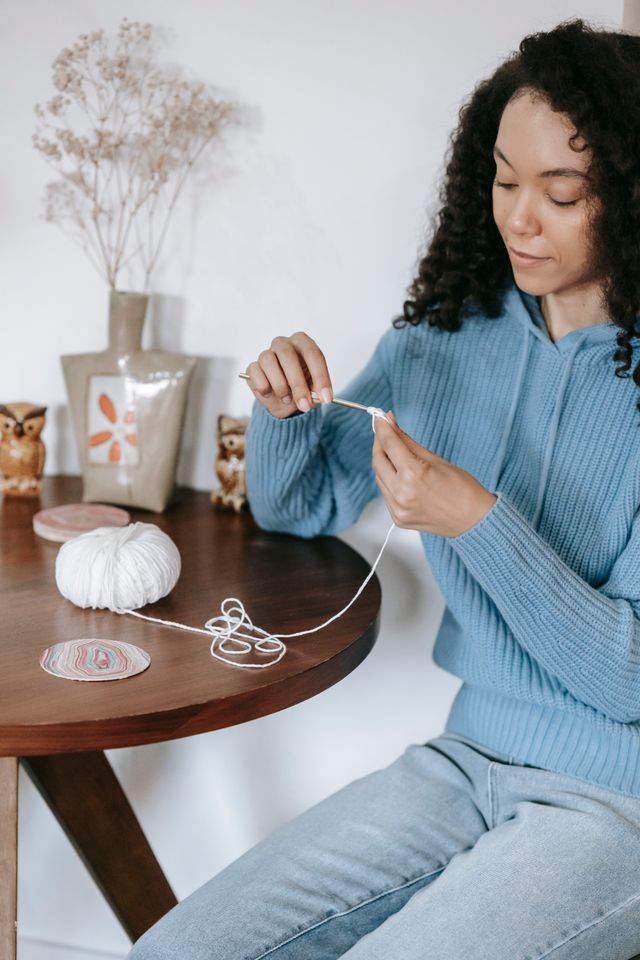
Making the first project is just the first step. An even crochet practice of fifteen to twenty minutes every evening is better for the process than infrequent long sessions that resemble events rather than a practice. Choosing a project with an additional challenge without making it too complicated is what helps to stay engaged without getting overwhelmed. Buying an ergonomic hook is the way to avoid getting wrist pain, which drives many adults to take long pauses from their work that they seldom return from.




Leave a comment